

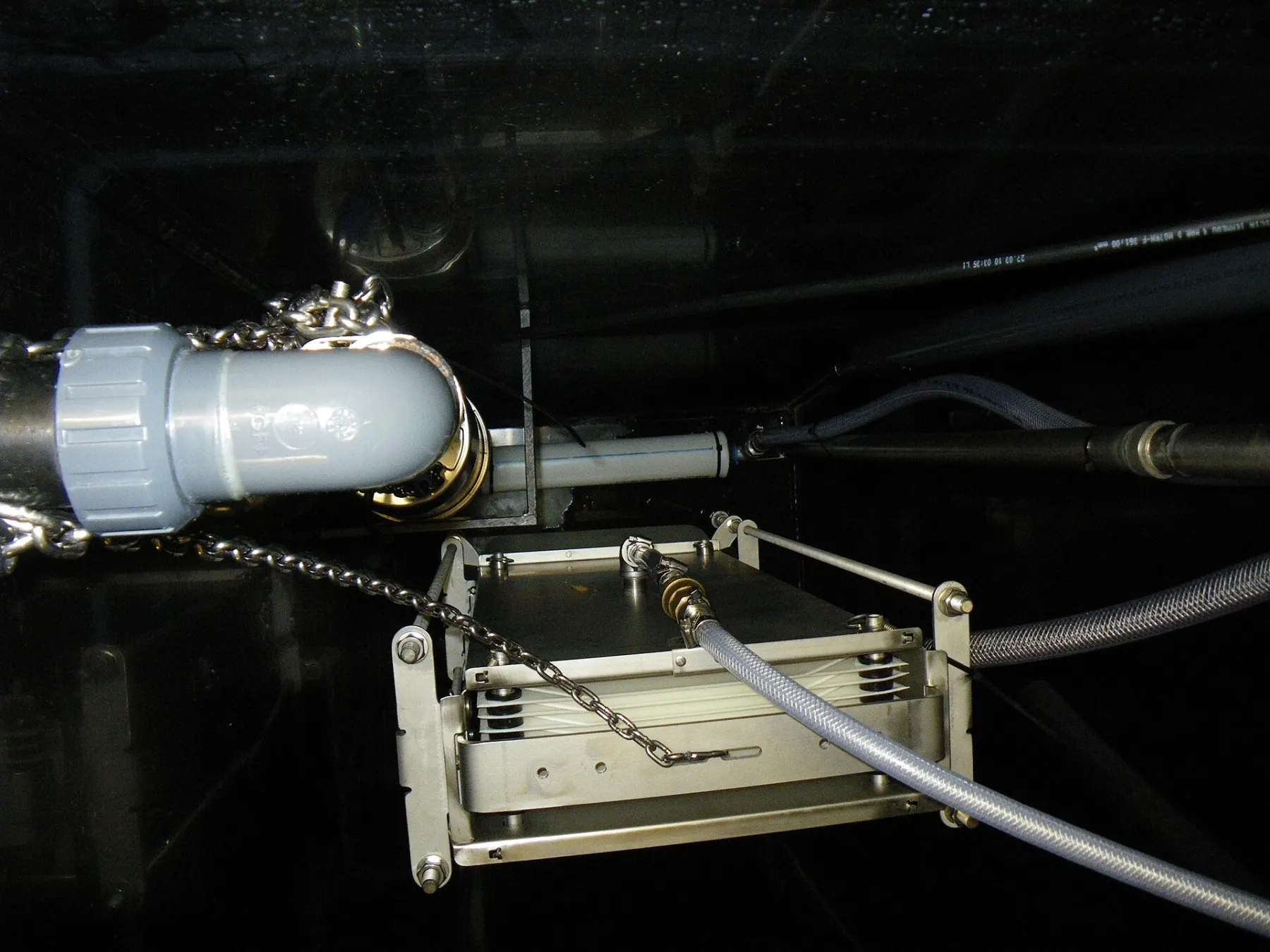
MBR wastewater treatment combines two proven processes in one system: biological treatment, where microorganisms consume dissolved organic matter, and membrane filtration, which separates the treated water from the biomass. The result is a high-quality effluent from a compact plant, which makes the technology attractive where space is limited or effluent standards are strict. This article explains how a membrane bioreactor works, what its benefits are, what operation and monitoring it demands, and when it suits oil and gas related wastewater.
How MBR wastewater treatment works
In a conventional activated sludge plant, wastewater is mixed with a population of microorganisms in an aeration tank, and the mixture then flows to a clarifier where the biomass settles out. Settling depends on the sludge behaving well, and a poorly settling sludge limits how much biomass the plant can hold.
An MBR replaces the clarifier with membranes. Water is drawn through the membrane, either submerged in the tank or in a separate loop, while the biomass is retained. Because solids are held back by a physical barrier and not by gravity, the tank can carry a higher concentration of microorganisms, and the effluent is largely free of suspended solids.
Membranes: what they do and do not do
The membranes used in these systems are typically microfiltration or ultrafiltration types, with pores small enough to retain bacteria and fine particles. This is why MBR effluent is clear and low in suspended solids and often suitable for further polishing or reuse.
Membranes do not remove everything. Dissolved salts and many dissolved chemicals pass through, so an MBR does not desalinate water, and toxic compounds that kill the biomass can still disrupt the process. Where salinity or specific dissolved contaminants are the problem, additional treatment steps are needed.
Benefits
The main advantages are:
- A smaller footprint than conventional systems, since no clarifier is needed and the biological tank can be more compact
- Consistent effluent quality with low suspended solids
- Tolerance of changes in flow and load, within design limits
- A good starting point for water reuse, where further polishing is added
- Modular construction, which allows capacity to be added in stages
Footprint matters at remote or sensitive sites, where land is limited and civil works are costly, and in the Albertine region where environmental sensitivity is high.
Operation and maintenance demands
The trade-off for compactness is a need for careful operation. Membranes foul over time as organic matter, fine solids and scale build up on their surface, and fouling raises the pressure required to draw water through. Plants manage this through air scouring, periodic backwashing or relaxation, and scheduled chemical cleaning, together with good pretreatment.
Pretreatment is critical for oilfield-related streams. Free oil, grease and coarse solids can quickly foul membranes, so screens, oil-water separation and equalisation normally sit upstream. The principles are the same as those in physical separation and filtration of oily waste. Operators also need to manage aeration, which consumes energy and keeps the biomass alive.
Membrane integrity and lifetime also need planning. Membranes are consumables, and their useful life depends on feed quality, cleaning regimes and how often the system is upset. Operators should keep a log of cleaning events, pressure trends and any damage, so that replacement can be planned and budgeted instead of arriving as an emergency. Spare modules, trained operators and clear procedures for chemical cleaning, including safe handling of the cleaning chemicals, are part of a dependable installation, and they should be agreed before commissioning.
Monitoring an MBR
Monitoring protects both the biology and the membranes. Typical measurements include:
- Flow and transmembrane pressure, which show whether fouling is developing
- Dissolved oxygen, pH and temperature in the biological tank
- Mixed liquor suspended solids, indicating the biomass concentration
- Effluent turbidity, a quick indicator of membrane integrity
- Laboratory analysis of organic load, nutrients and any permit parameters
Trends are more useful than single readings. A slow rise in pressure suggests fouling, while a sudden change in turbidity may indicate a membrane fault. Sludge is wasted from the system periodically and must be managed, as explained in sludge management in wastewater treatment.
Where MBR wastewater treatment fits on oil and gas sites
MBR suits streams that are biodegradable and that can be pretreated to protect the membranes: camp sewage, domestic and kitchen wastewater, and some process and washdown effluents after oil removal. It is less suited to high-salinity or strongly toxic streams without upstream treatment. For a wider view of how biological and membrane stages combine with primary and tertiary steps, see wastewater treatment for oil and gas sites.
Discharge or reuse of the output remains subject to permits and regulatory requirements, which operators should confirm with NEMA.
Final thoughts
Responsible operators select technology to match the stream, not for its novelty, and they plan for the people and routines that keep it working. White Nile Consults operates a 20 m3/h MBR wastewater system at its Kikuube facility as part of its waste water treatment and disposal service, which you can read about under waste water treatment and disposal. If you are considering a membrane-based approach for a site, please contact the team.
Comments
No comments yet. Be the first to share your thoughts.