

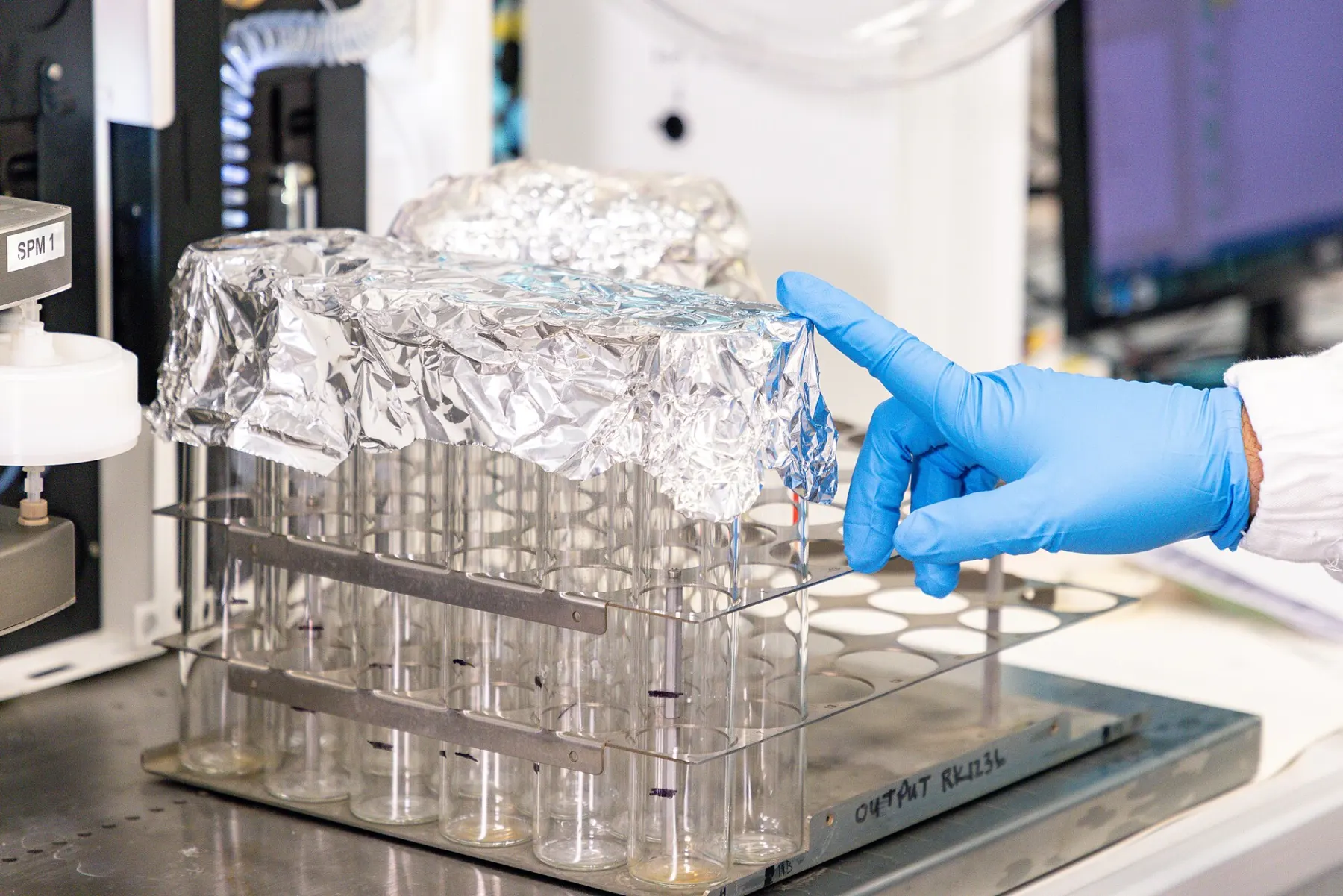
ISO 17025 laboratory testing is the quality framework that tells you whether a laboratory's numbers can be trusted. In waste management, those numbers decide how a drill cutting, sludge or effluent is treated, where it goes and whether the result passes a regulator's scrutiny. This article explains what ISO/IEC 17025 covers, why it matters for waste characterisation and treatment verification, and what an operator or HSE lead should ask before relying on a laboratory report.
What ISO 17025 laboratory testing actually covers
ISO/IEC 17025 is the international standard for the competence of testing and calibration laboratories. It does not prescribe which analytical method a laboratory must use. Instead, it asks whether the laboratory can show that it produces valid results consistently, using people, methods and equipment that are fit for the work.
In practice the standard looks at several areas:
- Staff competence, including training records and supervision of analysts.
- Suitability and validation of test methods for the matrix being analysed.
- Calibration and maintenance of instruments, with traceability to recognised references.
- Sample handling, identification and storage from receipt to disposal.
- Quality control, such as blanks, duplicates and checks against reference materials.
- Management of records, reporting and complaints.
The point is not paperwork for its own sake. A laboratory that works to this standard has to be able to explain how a result was produced and how confident anyone should be in it.
Why reliable results drive treatment decisions
Oilfield waste is variable. Two pits on the same pad can hold material that looks alike but behaves differently once it reaches a treatment cell. Laboratory results convert that visual impression into data: hydrocarbon content, salinity, metals, pH, moisture and, where relevant, leachability.
Those figures then steer real decisions. They help determine whether a waste is suited to bioremediation, whether solidification and stabilisation is needed, whether it can be reused or whether it must go to a licensed disposal route. If the underlying data are unreliable, the treatment may be mismatched to the waste, and the cost shows up later as rework, failed verification or an awkward conversation with the regulator.
For this reason waste characterisation is only as good as the laboratory work beneath it. Sampling can be careful and the plan sound, but a poorly controlled analysis still produces a weak foundation.
Where ISO 17025 laboratory testing fits across the treatment cycle
Testing is not a single event at the start. It recurs at several points, and each one has a different purpose.
At acceptance, results confirm that the incoming waste matches what the generator declared. During treatment, interim samples show whether the process is moving in the right direction. After treatment, verification samples show whether the material meets the agreed criteria for reuse, placement or disposal. Environmental monitoring, including effluent and groundwater samples, uses the same laboratory discipline.
For solidified material in particular, laboratory checks are central, and the approach is described in how solidification and stabilisation is tested. The principle is the same across all of these stages: consistent methods, documented samples and results that can be compared over time.
What to look for in a laboratory report
A project manager does not need to be an analytical chemist to review a report sensibly. A few practical checks go a long way:
- The report identifies the sample clearly, with date, location and sampling reference that match your chain of custody.
- The method used for each parameter is named.
- Units and reporting limits are stated, so you can tell a true zero from a result below detection.
- Quality control information is available on request.
- Any deviations, such as damaged containers or exceeded holding times, are declared.
- The report is signed or authorised by a named person.
If a result looks surprising, ask about it. A competent laboratory welcomes the question, and a repeat analysis or a check of the quality control data will usually settle it.
Sampling still matters as much as analysis
A laboratory can only report on the sample it receives. If a sample is not representative, even a flawless analysis describes the wrong thing. Heterogeneous materials such as oily sludge and mixed cuttings need a sampling plan that considers depth, location and number of samples. Containers, preservation and transport time also matter, particularly for volatile and water-related parameters.
Good practice is to agree the sampling approach, containers and delivery arrangements with the laboratory before the work starts. This is also where waste tracking and documentation earns its keep: a sample that cannot be tied back to a specific waste stream and date is hard to defend later.
Choosing and working with a laboratory
Ask whether the laboratory's accreditation or certification covers the specific tests you need, not just the laboratory in general. Scope matters. Confirm turnaround times, how urgent results are handled and who you speak to when a result needs interpretation.
Operators should also confirm current regulatory expectations with NEMA and, where the activity falls under petroleum operations, with the Petroleum Authority of Uganda. Requirements for which analyses are needed, and how they are reported, can differ by activity and permit.
Final thoughts
Responsible operators treat laboratory data as the evidence behind every waste decision, not an afterthought. Independent competence standards help, but the habit that matters most is asking how a number was produced before acting on it.
White Nile Consults Limited holds ISO/IEC 17025:2017 certification alongside its ISO 9001, ISO 14001 and ISO 45001 certifications, which are listed on the certifications page. If you want to discuss how testing supports treatment and disposal planning for your waste streams, you are welcome to contact the team.


Comments
No comments yet. Be the first to share your thoughts.