

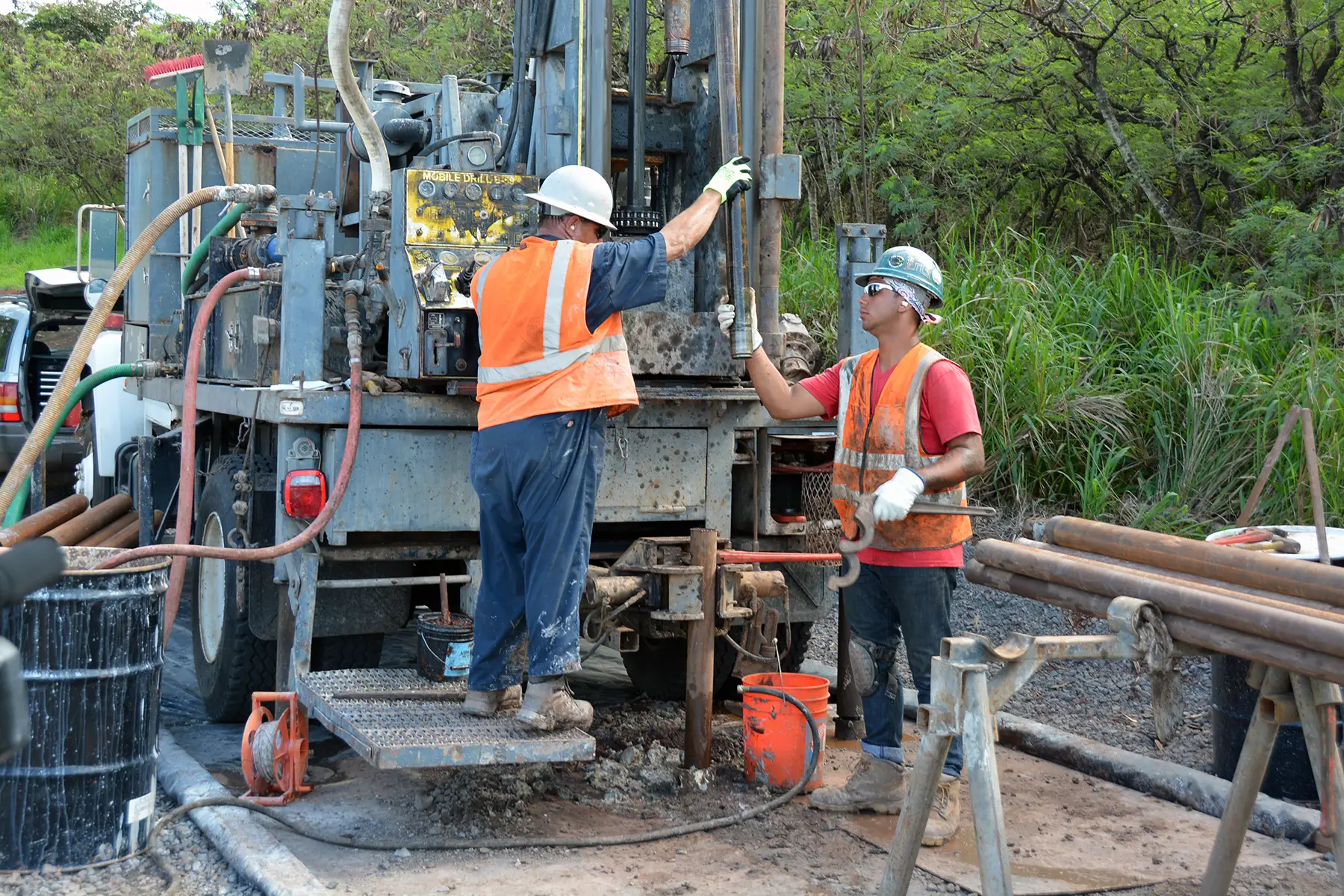
Groundwater monitoring is the routine that shows whether a waste treatment site is protecting the water beneath it. For operators and facility managers in Uganda, where many communities depend on boreholes and shallow wells, it is one of the clearest ways to demonstrate responsible practice and catch problems early. This article explains why monitoring matters, how baseline data are established, how wells are designed and sampled, the principles for choosing frequency and how results are interpreted and reported.
Why groundwater monitoring matters at treatment sites
Treatment cells, storage areas, lagoons and landfill cells all hold materials that could, if containment failed, release contaminants into the ground. Most of the time containment works as designed. Monitoring is how you confirm that, rather than assume it.
There are three practical reasons to do it. First, it provides early warning, so a small leak can be found and fixed before it becomes a wider problem. Second, it gives evidence for regulators, neighbours and partners that the site is not affecting water quality. Third, it supports sound decisions about site operation, because trends in the data show whether controls are working. Operators should confirm current monitoring and reporting obligations with NEMA, since they depend on the activity and the permits held.
Establishing a baseline before operations begin
A monitoring programme is only as useful as its baseline. Baseline data describe groundwater quality before the site operates, or as early as possible, so that later changes can be recognised as changes. Without it, a result that looks high might simply reflect natural conditions.
A baseline typically includes water level measurements, the direction of groundwater flow, general chemistry such as pH, conductivity and major ions, and parameters relevant to the site's wastes, for example hydrocarbons and metals. Seasonal variation is real in the Albertine region, so baseline records covering wet and dry periods are more informative than a single visit. The environmental baseline is usually developed as part of the project's assessment work, described in ESIA for oil and gas projects.
Designing the monitoring well network
Wells should be placed to answer a clear question: is anything moving from the site toward people or water bodies? That usually means at least one well upgradient of the site, to show background conditions, and several downgradient wells close to potential sources and near the site boundary. Placement relies on a sound understanding of local geology and the direction of flow, so a hydrogeological assessment comes first.
Good construction matters. Wells should be properly screened at the relevant depth, sealed against surface water entering, protected at the surface and labelled. Poorly built wells produce misleading data. Existing community boreholes can add useful information, with the permission of their owners, but they should supplement purpose-built monitoring points rather than replace them.
Sampling principles and frequency
Consistency is the guiding rule. Sampling should follow written procedures covering purging of the well, collection method, containers, preservation, labelling and transport to the laboratory. Record water level, weather conditions and any observations at the time of sampling.
Frequency is set by risk and by regulatory requirements, not by a universal formula. Sites with higher risk, shallow groundwater or nearby users usually warrant more frequent sampling, particularly in the early years of operation. Frequency can be reviewed as the dataset grows, but reductions should be justified by data and agreed with the regulator where necessary.
A practical checklist for each sampling round:
- Confirm well locations and condition before leaving for the field.
- Measure and record water levels first, before disturbing the well.
- Use clean, dedicated or decontaminated equipment for each well.
- Collect samples in the correct containers with the right preservation.
- Complete chain of custody documents and deliver to the laboratory within holding times.
- Note anything unusual, such as odour, sheen or damaged well headworks.
Laboratory analysis and interpretation
Samples should go to a competent laboratory using suitable methods, as explained in ISO 17025 laboratory testing for waste characterisation. Reliable data allow meaningful comparison with the baseline, with upgradient wells and with applicable standards or targets.
Interpretation looks at trends over time as well as individual numbers. A single high value deserves a repeat sample before conclusions are drawn, since sampling or analytical error is possible. A steady rise in one downgradient well, however, is a signal to investigate, even if the figure remains below a limit. Look at several parameters together, because a pattern across chemistry often tells you more than one reading.
Reporting and acting on results
Results should be compiled into clear periodic reports showing methods, data tables, comparisons with the baseline and conclusions. Report to the regulator as required and keep a record of any investigations and corrective actions.
Have a response plan before it is needed. If monitoring shows a possible impact, typical steps include confirming the result, inspecting containment and drainage, identifying the source, informing the regulator and applying corrective measures. The follow-on work after a confirmed release is discussed in oil spill cleanup and site remediation.
Final thoughts
Responsible operators monitor not because they expect failure but because evidence builds trust. A well-designed network, consistent sampling and honest reporting protect both the environment and the operator's licence to operate.
White Nile Consults Limited operates a licensed facility in Kikuube District under a NEMA licence and an ESIA certificate, with its certifications listed on the certifications page. If you have questions about monitoring for a treatment site, please contact the team.
Comments
No comments yet. Be the first to share your thoughts.