

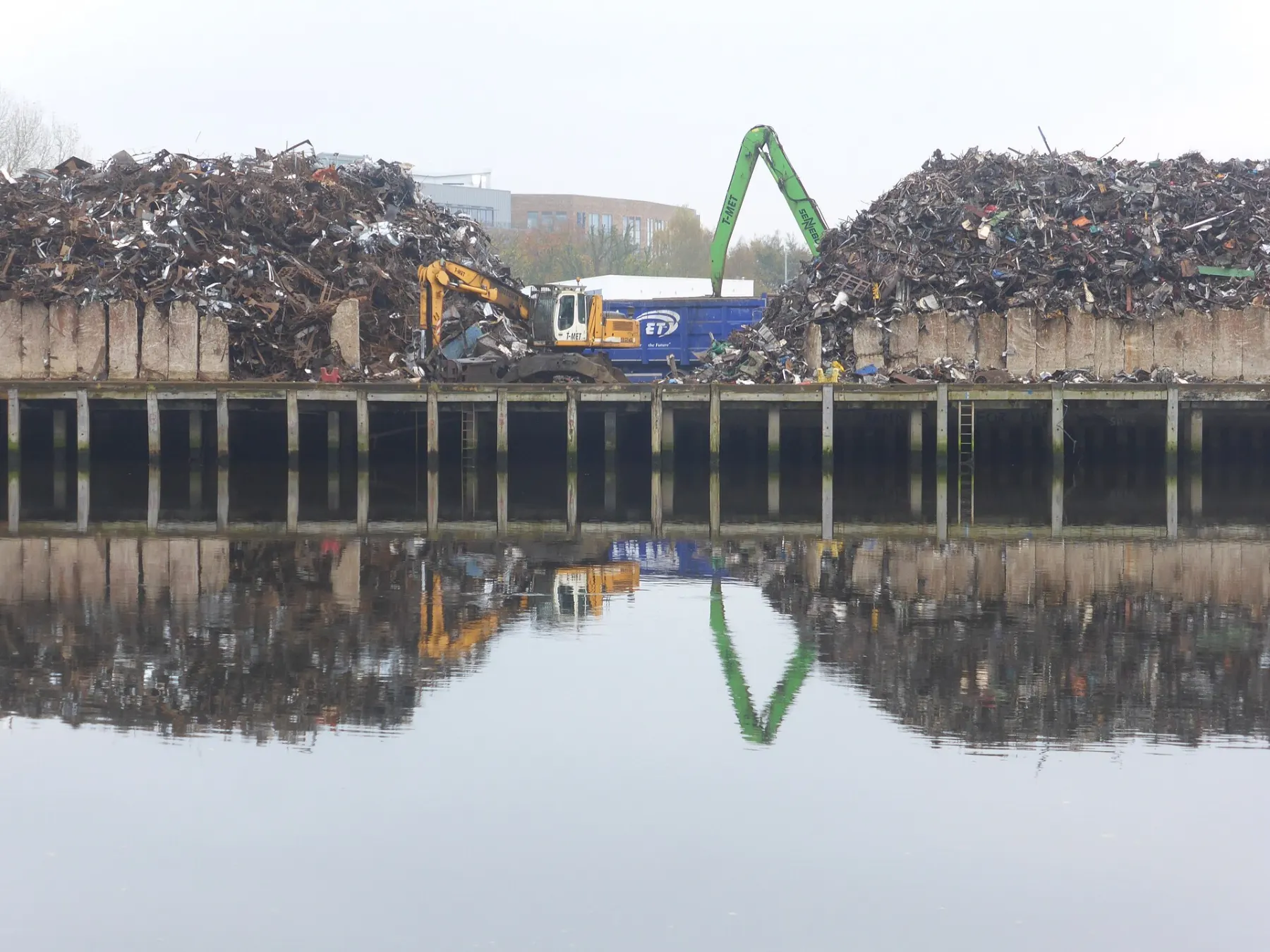
The waste management hierarchy is a simple ranking of options that tells operators what to try first and what to leave for last. In oil and gas operations it shapes decisions from rig design to contractor selection. This article walks through each level of the waste management hierarchy, gives practical examples from drilling sites, and explains how to apply it when circumstances do not allow the ideal choice.
What the waste management hierarchy says
The hierarchy ranks responses to waste from the most to the least preferred: prevent, reduce, reuse, recycle, recover, treat and finally dispose. The logic is straightforward. Waste that is never created needs no storage, transport or treatment, while waste sent to disposal represents the highest long-term burden and the lowest recovery of value.
Different organisations draw the ladder slightly differently, with recovery sometimes meaning energy or resource recovery and treatment sitting just above disposal. What matters is the principle: work down the list only when the level above is not workable.
Prevention and reduction at drilling sites
Prevention starts in planning. A well design that uses fewer or smaller hole sections generates fewer cuttings. Careful selection of drilling chemicals avoids creating hazardous residues that did not need to exist. Reduction then continues through operations, for example by tuning solids control equipment so that more fluid is returned to the active system and less leaves with the cuttings. This topic is covered in more depth in reducing waste at the source in drilling operations.
Housekeeping counts too. Drip trays, bunded storage and prompt leak repair keep small releases from turning into large volumes of contaminated soil.
Reuse, recycling and recovery
Reuse means using something again for the same or a similar purpose. Conditioned drilling fluid moved to a following well is a classic case, as are returnable chemical containers and reusable pallets. Recycling reprocesses material into a new product: clean scrap steel, plastics and paper from camps are common examples. Recovery pulls value out of a waste, such as reclaiming oil from sludge or recovering water for dust suppression or washdown, where that is appropriate.
White Nile Consults prioritises recovery and reuse, with disposal last, and its valorization of waste service is built around that principle. For wider examples, see recycling and reuse in oilfield operations.
When waste cannot be prevented or reused, it should be treated to reduce its hazard or volume before disposal. Typical methods include bioremediation, solidification and stabilisation, physical separation and water treatment, selected to suit the waste type and risk. The treated residue that remains is then sent to disposal in a licensed facility.
At this stage the choice of facility matters as much as the choice of method, because the facility's licence defines what it may lawfully accept. Disposal is not a failure; some waste has no sensible alternative route. The aim is that it is the final step and not the default one.
A practical checklist for applying the waste management hierarchy
- At planning stage, list each expected waste stream and ask whether it can be avoided.
- For each stream, name the highest hierarchy level that is technically and legally workable.
- Record why a higher level was rejected, so that the decision can be reviewed later.
- Ask contractors to show how their methods rank against the hierarchy.
- Review volumes sent to disposal during the project and look for reductions.
When the ideal option is not available
Real sites impose limits, and teams that expect this tend to plan alternatives in advance. A reuse route may need approval that has not been granted, a recycler may be far away, or a waste may be too contaminated to reclaim. In such cases, document the constraint and move to the next suitable option rather than skipping levels. Operators should confirm any regulatory conditions on reuse or recycling with NEMA, since some beneficial uses need approval.
It also helps to consider safety and total impact. A recycling route that requires long transport of hazardous material may not be preferable to treatment close to the source. The hierarchy is a guide to good judgement, not a substitute for it. Understanding the broader process is helpful, and the article on what oilfield waste management involves gives context.
Measuring progress down the ladder
A hierarchy is only useful if it is checked. Many operators record the share of each stream that goes to reuse, recycling, treatment and disposal, then compare figures from one well or quarter with the next, using their own data rather than outside benchmarks. A falling volume sent to disposal, with stable or rising reuse, suggests the approach is working. A rising disposal volume is a prompt to ask what changed. Contractors can support this by reporting treatment outcomes clearly, so that operators see not only how much left site but what happened to it.
Final thoughts
Responsible operators use the hierarchy as a standing question at every stage: can this be avoided, reused or recovered before we treat or dispose of it. They keep records of the answers and revisit them as projects evolve. If you would like to explore how the hierarchy applies to your project, please contact the team.
Comments
No comments yet. Be the first to share your thoughts.