

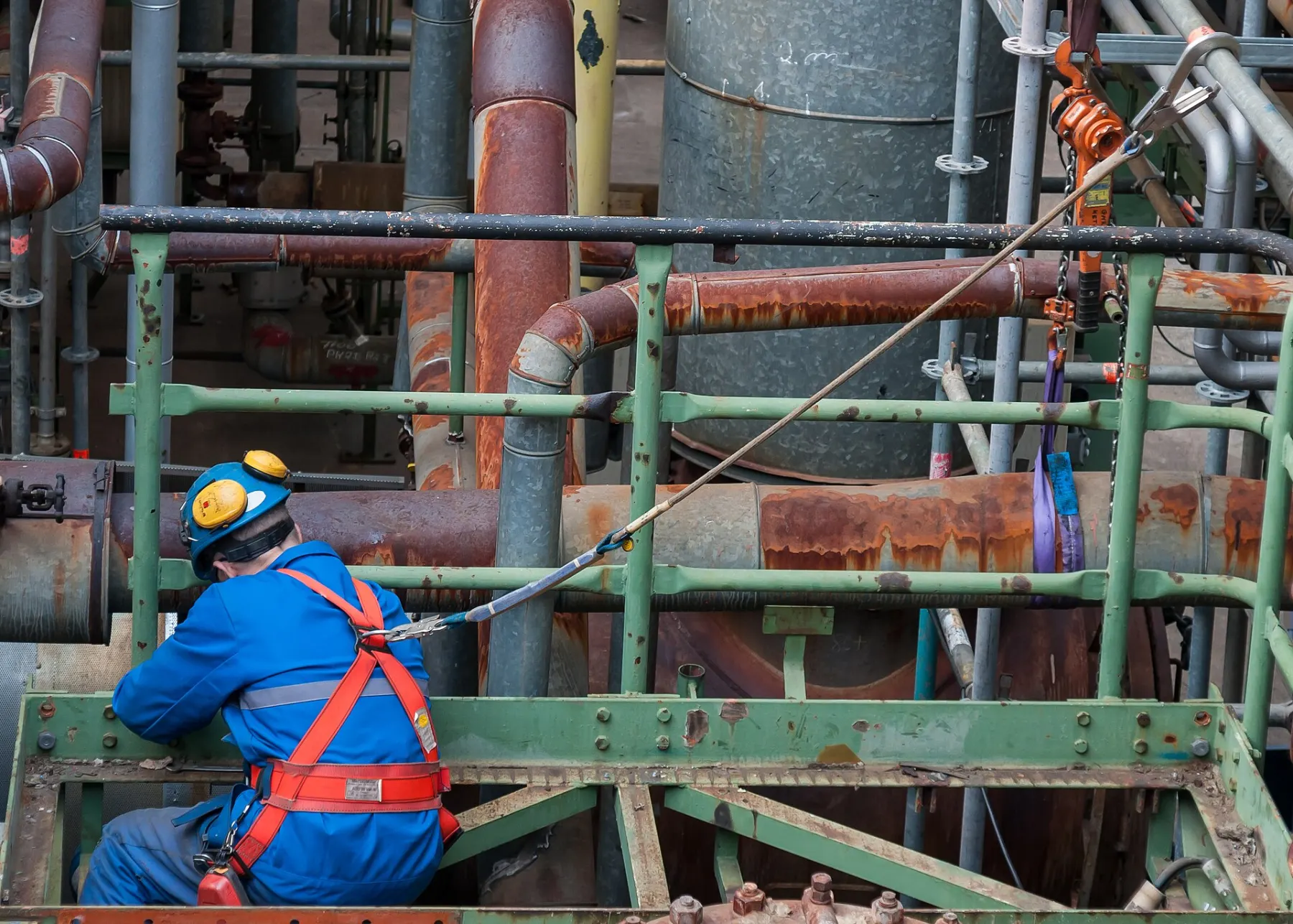
Waste facility safety PPE is the last line of defence at a treatment site, and it only works when it sits inside a wider system of hazard control, induction, supervision and emergency preparedness. Facilities that handle drill cuttings, drilling fluids, oily sludge and contaminated soil expose people to hydrocarbons, dust, noise, moving plant, chemicals and heat. This article explains how to select PPE sensibly, what an induction should cover and how housekeeping, supervision and drills hold the whole arrangement together.
Start with the hazards, not the equipment list
PPE should be chosen after the hazards have been identified and, where possible, reduced by other means. The usual order of control runs from elimination and substitution, through engineering controls and administrative arrangements, and only then to personal protective equipment. Relying on PPE alone means the hazard is still present and a single lapse can result in an injury.
At a waste treatment facility, typical hazards include:
- Skin and eye contact with oily waste, brines and treatment chemicals.
- Inhalation of vapours, dust or fumes, especially during excavation, mixing and tank work.
- Slips and falls on oily or muddy surfaces.
- Moving vehicles, excavators and loaders.
- Noise from plant and equipment.
- Heat and sun exposure.
- Confined spaces and work near open tanks or pits.
A written risk assessment for each task shows which of these apply and what PPE is genuinely needed.
Selecting waste facility safety PPE that fits the task
There is no single kit for every job. A sampler at an oily sludge pit needs different protection from a vehicle marshal or a laboratory technician. Selection should reflect the specific substances, the task and the working conditions.
Core items often include a hard hat, safety glasses or goggles, high-visibility clothing, safety boots with good grip and toe protection, and gloves suited to the substance. Glove choice matters more than people expect: a glove that suits dry solids may degrade quickly against hydrocarbons or chemicals, so check the manufacturer's guidance and the safety data sheet. Additional items such as face shields, chemical-resistant overalls, hearing protection and respiratory protection are added where the assessment calls for them.
Fit, comfort and condition are practical points. Equipment that is uncomfortable, damaged or poorly sized tends to be worn incorrectly or not at all. Provide it in the right sizes, replace it on a schedule and give workers a simple way to report defects.
Induction and competence
Every worker and visitor should receive a site induction before entering operational areas. A useful induction is short, specific and checked. It typically covers:
- Site layout, restricted areas and pedestrian and vehicle routes.
- The main hazards and the controls in place.
- Required PPE for each zone and how to use, store and inspect it.
- Reporting of incidents, near misses and unsafe conditions.
- Emergency alarms, assembly points and first aid arrangements.
- Stop-work authority, meaning anyone can halt a task they believe is unsafe.
Task-specific training follows for activities such as confined space entry, work at height, lifting, spill response and handling treatment chemicals. Keep records, and refresh training at sensible intervals. Management system standards such as ISO 45001 expect this kind of competence evidence, and the article on ISO 45001 health and safety in waste handling explains what is involved.
Housekeeping and the working environment
Good housekeeping prevents many injuries before PPE is ever needed. Keep walkways clear, clean up small spills straight away, maintain drainage and bunding, store chemicals in labelled and segregated areas and manage waste at the work area so it does not accumulate. Lighting, signage and clear traffic separation all contribute.
Housekeeping also affects environmental performance. A tidy site is easier to inspect, and a leak or damaged container is easier to spot when it is not hidden by clutter. These habits are part of the broader operational discipline described in inside the Kikuube treatment facility.
Supervision and waste facility safety culture
Written procedures count for little without supervisors who enforce them consistently and who listen. Effective supervision includes visible presence in the work area, regular task observations, prompt correction of unsafe acts and recognition of good practice. Workers should feel able to report near misses without fear of blame, because near misses are free lessons.
Contractors and visitors need the same standards as employees. State the PPE and induction requirements in contracts and check them at the gate.
Emergency drills and first response
Emergency arrangements should cover fire, spills, medical incidents, vapour release and evacuation. Drills turn paper plans into habits. Practise them at different times of day and with different shifts, review what went wrong and update the plan. First aid supplies, eyewash stations and spill kits should be easy to reach and regularly inspected, and trained first aiders should be available on each shift.
Spill response in particular rewards rehearsal, and the principles are outlined in the guide to emergency response for oil spills.
Final thoughts
Responsible operators treat PPE as one part of a layered approach: identify hazards, control them at source, train people, supervise the work and practise the response. Operators should also confirm current occupational health and safety obligations with the relevant authorities.
White Nile Consults Limited is ISO 45001:2018 certified, and its certifications are listed on the certifications page. For questions about site safety arrangements or visiting the facility, please contact the team.
Comments
No comments yet. Be the first to share your thoughts.